
By Joey Havlock
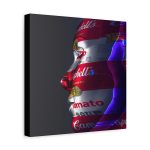 The Master Minds Series is one of the most personal and conceptually driven bodies of work I have created. It is a collection of paintings, drawings, designs, and visual explorations that revolve around a central theme that has fascinated me for most of my life: the architecture of the human mind.
Through this series I explore consciousness, perception, and the strange and beautiful systems that shape the way we think. Each piece is a kind of visual experiment—an attempt to map thoughts, emotions, symbols, and mental structures using color, geometry, and surreal imagery.
Over time, these works have evolved into a large and ongoing universe of images that live not only as original artworks but also as prints, canvas pieces, and design elements presented through Havlock.com and my artist portfolio at JoeyHavlock.com.
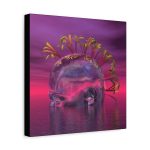 Where the Idea Began
The idea behind the Master Minds Series grew naturally from my lifelong interest in both art and systems thinking.
I’ve always been fascinated by the way the mind organizes information—how it builds frameworks, symbols, patterns, and meaning from what often seems like chaos. At the same time, my experiences working with technology and structured systems influenced the way I think about visual composition.
In many ways, the Master Minds artworks are maps of thought.
They are my attempts to visualize the invisible—ideas, emotions, subconscious impulses, and intellectual structures that shape our inner world.
My Visual Language
When I work on a piece from the Master Minds Series, I often combine several elements that have become part of my artistic language:
-
simplified or abstracted human heads and mind-like forms
-
surreal symbolic objects
-
geometric frameworks and architectural shapes
-
bold color contrasts and energetic compositions
-
conceptual titles that hint at psychological states or philosophical ideas
Some works appear playful, while others feel more mysterious or introspective. But all of them revolve around the same central question:
What does the mind actually look like when we try to see it?
For example, pieces like Silent Mind Fists of Flowers explore the tension between emotional energy and mental stillness. Others, such as Transient Boxed Mind Trap, examine the idea that our own thinking can create invisible boundaries or cages around our perception.
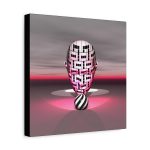 Blending Technology and Human Dynamics
Another important influence on this series comes from my background in technology and systems development.
I’ve always believed that art and technology are not opposites—they are complementary ways of exploring complexity. Technology builds systems that organize information, while art builds systems that organize meaning.
When I create Master Minds works, I often think about structure the way an engineer or architect might. Shapes interact like components in a network. Visual elements connect like pathways in a circuit.
But instead of transmitting electricity or data, these systems carry emotion, symbolism, and psychological energy.
I sometimes describe my process as combining state-of-the-art technology with state-of-the-art human dynamics—using visual systems to express the strange complexity of the human mind.
From Artworks to Everyday Objects
While many of the Master Minds pieces exist as original artworks or gallery prints, I’ve also expanded the series into a broader range of creative formats through Havlock.com.
These include:
-
canvas gallery prints
-
metal prints
-
apparel and fashion designs
-
decorative objects and collectibles
I enjoy seeing the artwork move beyond traditional gallery walls. When art becomes part of everyday life—on a wall, on clothing, or integrated into design—it becomes something people interact with more personally.
It stops being distant and starts becoming part of someone’s environment and experience.
Exploring the Inner Landscape
At its core, the Master Minds Series is about exploring the inner landscape of consciousness.
Every piece asks questions that don’t necessarily have simple answers:
-
How does the mind create meaning?
-
What structures exist beneath our thoughts and emotions?
-
How do imagination, memory, and logic interact with one another?
-
Where does the boundary between chaos and order really exist?
Rather than explaining these questions directly, I prefer to let the imagery create an open space for interpretation. Each viewer can bring their own experiences, emotions, and ideas into the work.
In that sense, the artwork becomes a kind of conversation between the viewer and the mind itself.
An Ongoing Exploration
The Master Minds Series is not something I consider finished. It continues to evolve as new ideas, new technologies, and new artistic directions emerge.
For me, it represents an ongoing exploration into one of the most complex and mysterious subjects we encounter in life:
our own consciousness.
Every new piece is another attempt to visualize thought itself—to capture the strange intersection where imagination, structure, emotion, and perception meet.
And in the end, that is what the Master Minds Series has always been about:
the limitless architecture of the human mind.